A thousand subscribers is a magic number. It’s big enough to test offers, attract a small sponsor, and get real feedback. It’s small enough that you can hit it without an ad budget or a viral moment.
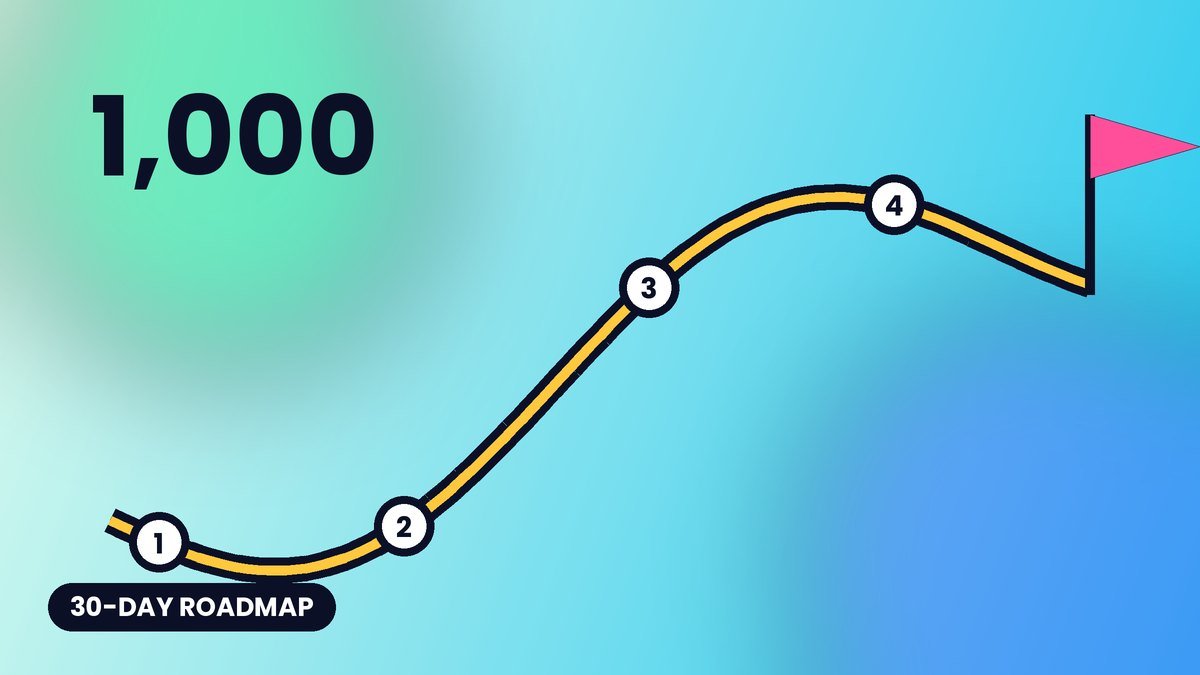
This roadmap breaks the climb into four weekly sprints. It assumes you have an audience of roughly zero and a few hours a week. Follow it honestly and you will build the machine that gets you to 1,000. Some people get there in 30 days; others need 60 or 90. The machine is what matters, because it keeps running after the month ends.
Pro tip: Do the math before you start. 1,000 subscribers in 30 days is about 33 per day. That’s the target to beat. Break it down by channel (for example, 10 from your blog, 10 from social, 8 from a partner, 5 from referrals) and it suddenly feels doable.
Week 1: Build the foundation (Days 1–7)
This week is all setup. It feels slow, but skipping it is why most lists stall at 47 subscribers.
Day 1: Define your promise
Finish this sentence: “Every [frequency], I send [who] [what] so they can [result].”
Example: “Every Tuesday, I send busy freelance designers one pricing tactic so they can charge more without losing clients.” Specific promises grow faster than vague ones. “Tips about design” is forgettable; “one pricing tactic every Tuesday” is a reason to subscribe.
Day 2: Set up your platform
Pick an email service provider. Creator-focused platforms like Kit or Beehiiv, budget-friendly options like MailerLite or Brevo, or automation-heavy tools like ActiveCampaign all work. Pick one and move on; you can switch later. Connect your own domain as the sender.
Day 3: Create your lead magnet
Make one quick-win freebie: a checklist, a template, a swipe file, a short email course. It should solve one narrow problem in under 15 minutes of reading. (Need ideas? See 27 Lead Magnet Ideas That Actually Convert.)
Day 4: Build your landing page
One page. One goal. Headline that states the result, three bullets on what’s inside, a form with just the email field (and maybe first name), and a button that says what they get: “Send me the checklist” beats “Submit” every time.
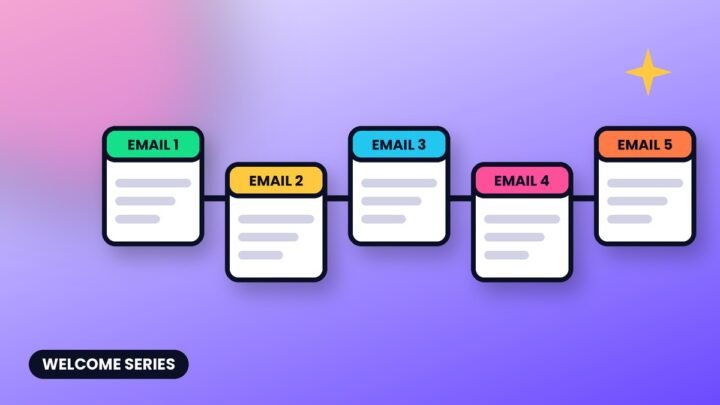
Day 5: Write your welcome email
Deliver the freebie, say who you are in two sentences, and tell them what to expect next. Ask them to reply with one word about their biggest challenge. Replies help deliverability and give you content ideas.
Days 6–7: Plant opt-ins everywhere
- Link in every social bio
- Top bar or header form on your website
- Inline form at the end of every blog post
- Email signature link
- Pinned post on your main social profile
- Your “thank you” or checkout page, if you sell anything
Week 2: Content that pulls people in (Days 8–14)
Now you need traffic. The fastest free traffic comes from content that makes your lead magnet the obvious next step.
The “bridge content” method
Create content that solves part of a problem and points to your freebie for the rest. If your lead magnet is a pricing calculator for designers, post “3 pricing mistakes that cost designers money,” then close with “I built a free calculator that fixes all three. Link in bio.”
Your week 2 content plan
- Days 8–9: Write one cornerstone article or long post that deeply covers your core topic. End it with your opt-in.
- Days 10–12: Slice that article into 6–9 short social posts. Each one ends with a call to grab the freebie.
- Day 13: Show up where your audience asks questions (forums, communities, comment sections) and answer generously. Only mention your resource where it’s genuinely helpful and allowed.
- Day 14: Review. Which post drove the most signups? Make two more like it.
Watch out: Never buy or scrape email lists to speed things up. It violates the rules of reputable email platforms, can break privacy laws, and wrecks your sender reputation. A list of strangers who never opted in is worse than no list at all.
Week 3: Borrow other people’s audiences (Days 15–21)
Solo growth is slow. The shortcut is putting your freebie in front of audiences that already trust someone else.
Tactic 1: Newsletter swaps
Find 5–10 newsletters in adjacent (not identical) niches, roughly your size. Offer to recommend them to your list if they recommend you. Even at small sizes, a warm recommendation can bring a meaningful bump.
Tactic 2: Guest content
Pitch a guest post, podcast appearance, or live session. Your bio or mention should point to a dedicated landing page with your freebie, not your homepage.
Tactic 3: Giveaway bundles
Team up with other creators to offer a bundle of freebies. Everyone promotes it; everyone’s opt-in is inside. Be transparent about who will email subscribers so people know what they’re signing up for.
A pitch template you can steal
Subject: Quick swap idea for [Their Newsletter]
Hi [Name], I read [Their Newsletter] every week. Your issue on [specific topic] was great. I write [Your Newsletter] for [audience], about [size] subscribers and growing. Would you be up for a simple recommendation swap? I’ll feature you in my next issue, and you mention me whenever works. Happy to write the blurb for you. Cheers, [You]
Week 4: Turn subscribers into recruiters (Days 22–30)
Your happiest subscribers are your best marketers. This week you give them a reason to share.
Day 22–24: Launch a simple referral nudge
You don’t need fancy software. Add a line at the bottom of every email: “Know someone who’d like this? Forward it. If this was forwarded to you, subscribe here.” If your platform offers a built-in referral program, reward milestones with bonus content.
Day 25–27: Upgrade your best content
Look at your top two blog posts or social posts. Create a “content upgrade” for each: a checklist or template specific to that exact topic. Specific upgrades often convert better than a generic site-wide freebie.
Day 28–30: Review, prune, repeat
- Which channel brought the most subscribers?
- Which brought the most engaged ones (clicks and replies, not just opens)?
- What will you double down on next month?
Profit move: By the end of week 4, make your first small offer, even something low-priced like a template pack or an affiliate recommendation you genuinely use. Selling early teaches your list that you occasionally recommend paid things, and it gives you real data on what a subscriber is worth.
The 30-day scoreboard
| Metric | Why it matters | What to aim for |
|---|---|---|
| Landing page conversion | Tells you if your offer is appealing | Many solid pages convert roughly 20–40% of visitors; below 10% suggests your headline or freebie needs work |
| Subscribers per day | Your growth velocity | Trending upward week over week |
| Welcome email clicks | Did they want the freebie? | A healthy share of new subscribers clicking through |
| Replies | The strongest engagement signal | Any replies at all are a great sign early on |
Don’t obsess over open rates. Privacy features like Apple Mail Privacy Protection can inflate them, so clicks and replies tell you more.
If you’re behind at day 30
Totally normal. Most people who miss the target skipped week 3. Borrowing audiences is uncomfortable, and it’s also the lever that moves fastest. Send five more swap pitches. Then check your landing page headline: is the result obvious in three seconds? Fix those two things and your curve usually bends.
Key takeaways
- 1,000 subscribers is about 33 per day over a month; split that target across channels.
- Week 1 is setup: promise, platform, lead magnet, landing page, welcome email, opt-ins everywhere.
- Week 2 is bridge content that points naturally to your freebie.
- Week 3 borrows other audiences through swaps, guest spots and bundles.
- Week 4 turns subscribers into recruiters and gets your first offer out the door.
Want a guided version of this roadmap with daily prompts? Enroll in the free 7-Day Email Profit Bootcamp, and grab ready-made landing page and welcome email copy from our Templates library.
Join the Profit Inbox Insiders
Weekly email marketing plays, free tools and templates. Plus the free 7-Day Email Profit Bootcamp.